
The one test that actually works
Above ground the two types can be near-indistinguishable, which is why so much bamboo gets misidentified in both directions. Height, cane thickness and leaf shape all vary enormously within each group, and a young plant of either tells you very little.
So ignore what the plant looks like and ask one question instead: where are new canes coming up?
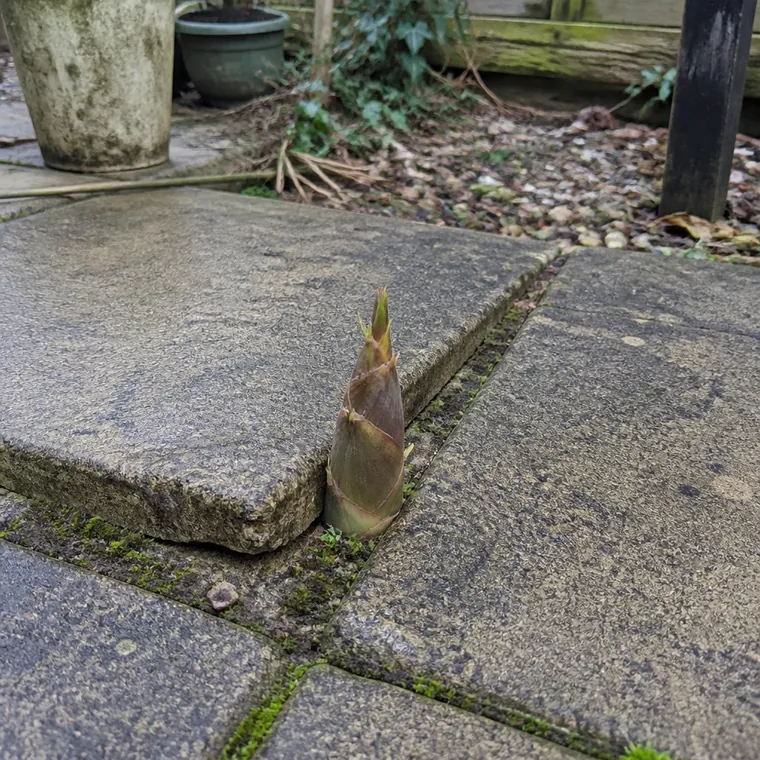
If shoots are appearing away from the main clump — across a path, out in the lawn, through a patio joint, in a border two metres off, on the far side of a fence — you have a running type. That is what running means, and it is not something a clumping bamboo does.
If the clump is simply getting wider at its edges, year on year, with nothing appearing at a distance, that is very likely a clumping type and probably nothing to worry about.
What the difference looks like underground
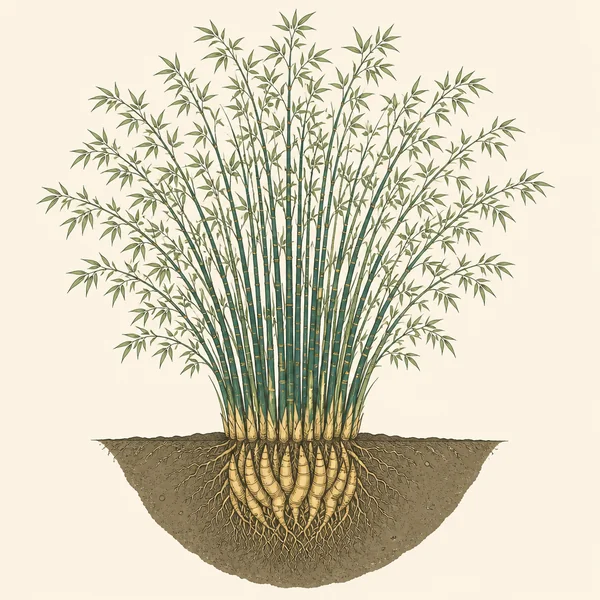
This is where running and clumping genuinely differ, and it is why a photograph of the canes settles nothing. If you put a spade in at the edge of the clump, one of these two is what you will find.
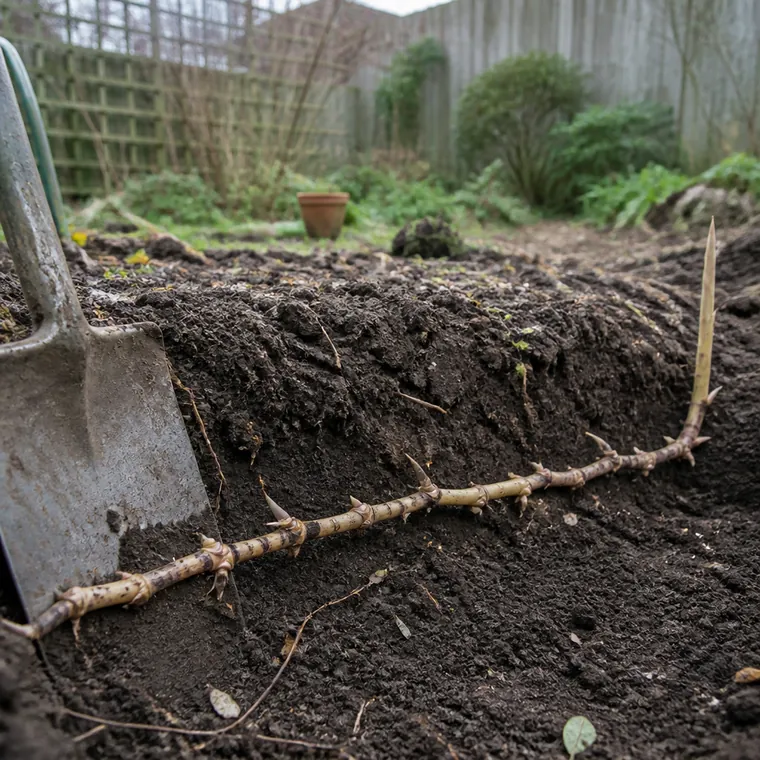
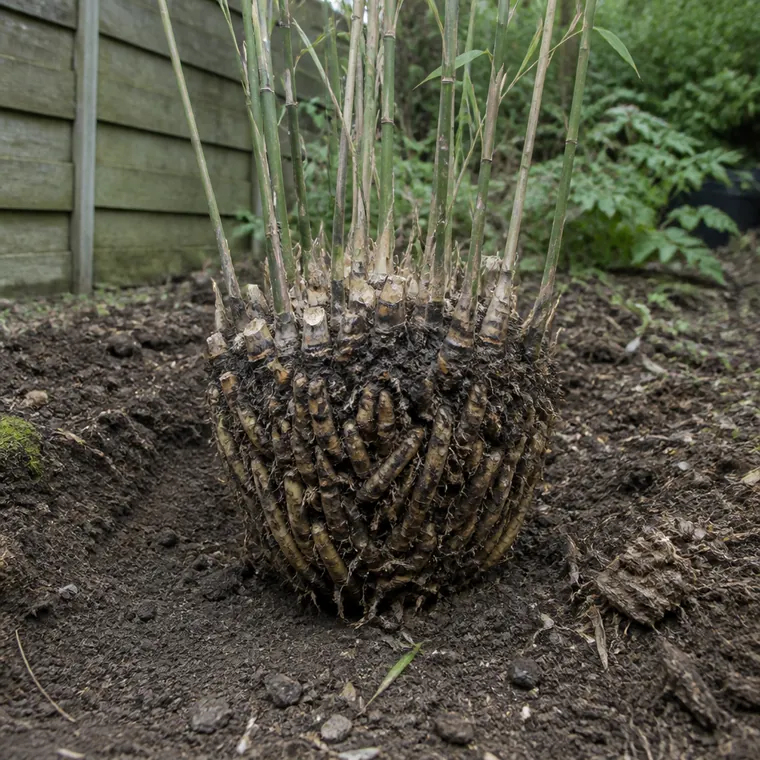
You do not need to dig a trench to check. A small hole a foot or two out from the edge of the clump, on the side where you have seen new shoots, is usually enough to tell which of these you have.
The signs above ground
What a running bamboo looks like when it has already started travelling.
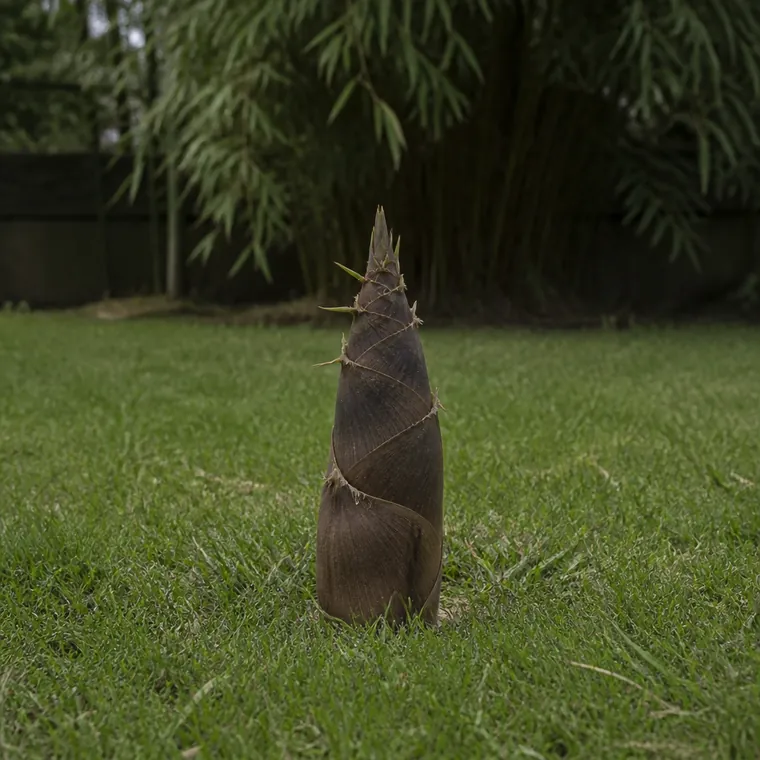
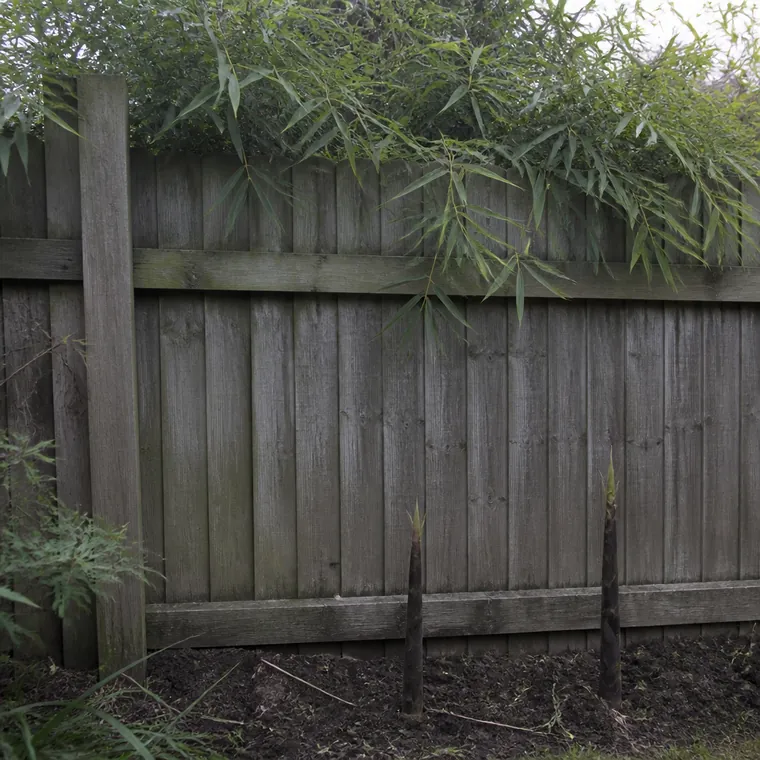
The four you're most likely to have
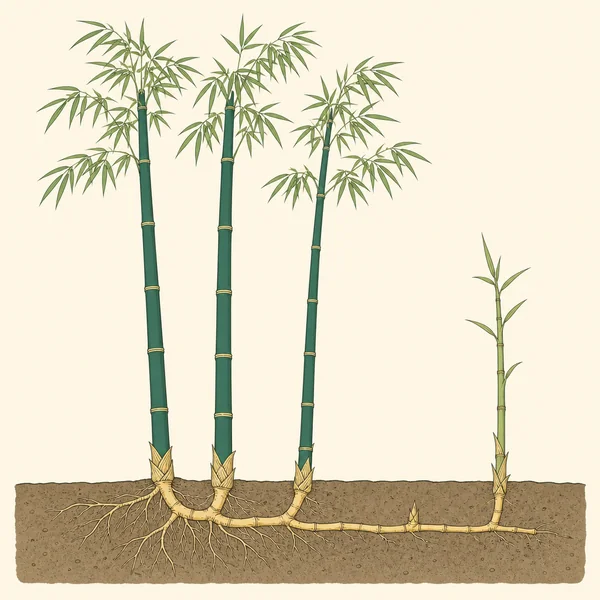
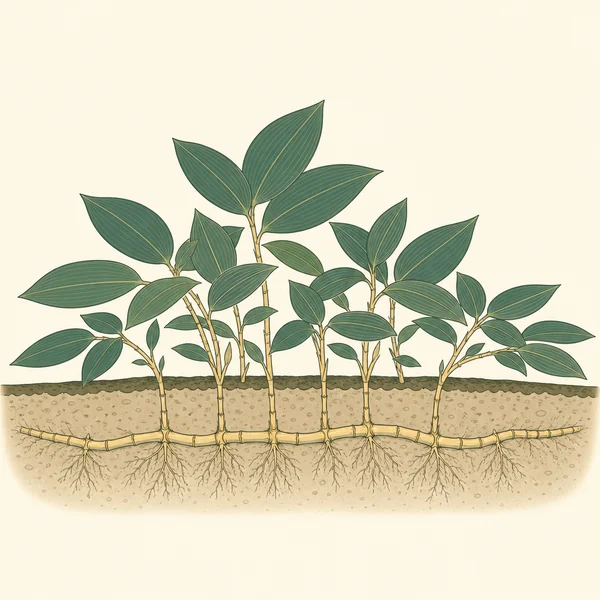
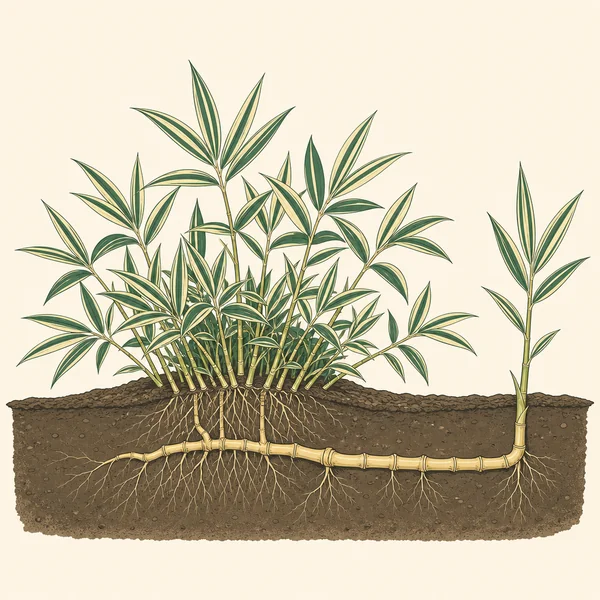
Three runners that were sold widely as screening, and the well-behaved one. The illustrations show the rhizome form as well as the plant, because the underground half is where the difference actually is.
Side by side
This is one of the commonest reasons people end up on this page, and the label is frequently wrong. “Non-invasive” and “clump-forming” get used loosely on plant labels, garden-centre staff are not always told which species they are selling, and plants bought online often arrive labelled only as “bamboo”.
The plant settles it, not the pot. If new canes are coming up away from the original clump, you have a running type whatever it said when you bought it.
You've got a running type. Now what?
Do not panic, and do not reach for a spade yet. Two things are worth establishing before you spend anything.
How far has it actually gone? The canes are not the extent of it. Rhizomes run through the top layer of soil and can be well beyond anything visible, and that extent decides both how serious this is and what dealing with it costs.
Has it reached anything that matters? Rhizomes in open lawn are a nuisance. Rhizomes into paving joints, a drive, a drain run, a wall footing or across a boundary are a different conversation, and the last of those can become a legal one.
From there you have two real options: contain it behind a properly installed root barrier if you want to keep the screen and there is still a clean line to enclose, or remove it if you want it gone or it has already spread too widely for a barrier to have anything tidy to contain.
What does not work is cutting the canes down and hoping. The rhizome is the plant; the canes are just what it puts up.
Frequently asked questions
How fast does running bamboo spread?
Enough to matter, and mostly in a burst you will not see. Rhizomes extend during the growing season and the new canes come up in spring, so the change tends to arrive all at once rather than gradually — which is why people describe bamboo as appearing overnight in a new part of the garden.
How far depends heavily on the species, the soil and how established the plant is. Loose, well-watered, well-fed soil lets it travel considerably further than heavy compacted clay. The practical point is that the network is always wider than the canes suggest, and it only ever gets wider.
Can a clumping bamboo become a running one?
No. It is a structural difference in how the plant grows, not a behaviour it can switch to. A Fargesia will not start running because it is unhappy or because the summer was wet.
What does happen is that people discover the plant was never a clumping type in the first place. If a bamboo you believed was clumping starts sending up canes at a distance, the identification was wrong — not the plant.
Can you identify it from a photo?
Partly. A clear picture of the canes, the leaves and the base will usually get an experienced eye to the right genus, and the branching pattern at the cane joints is often the giveaway.
What a photo cannot show is the half that matters — whether the rhizomes are running and how far they have already travelled. That is established by looking underground, and it is what determines both whether you have a problem and what fixing it costs. A photo is a good way to start the conversation and a poor way to end it.
Is running bamboo illegal to plant in the UK?
No. Bamboo is not listed on Schedule 9 of the Wildlife and Countryside Act 1981, there is no offence of planting or allowing it to grow, and it is sold freely in garden centres. It is genuinely not Japanese knotweed and it is worth being clear about that.
What you cannot safely ignore is where it goes. Bamboo that spreads across a boundary and damages a neighbour's property, or interferes with their use of their garden, can amount to a private nuisance — and the cost of putting that right can fall on the owner of the bamboo. This is general information about how these situations usually work in England and Wales, not legal advice. Take your own advice on your own circumstances before relying on any of it.
Which bamboo should I plant instead?
If you want a screen and no future trouble, a Fargesia is the standard answer — dense, evergreen, well-behaved, and it will not go anywhere. It tends to be a little shorter and less architectural than the running types, which is the trade-off.
If you specifically want the tall, thick canes of a Phyllostachys, plant it inside a root barrier from day one. Installing the barrier at planting is a fraction of the cost of retrofitting one around an established stand, and a tiny fraction of digging the whole thing out in ten years.